If you work in facilities management, you have probably come across both CAFM
and IWMS when researching software. The terms are sometimes used
interchangeably, but they are not exactly the same.
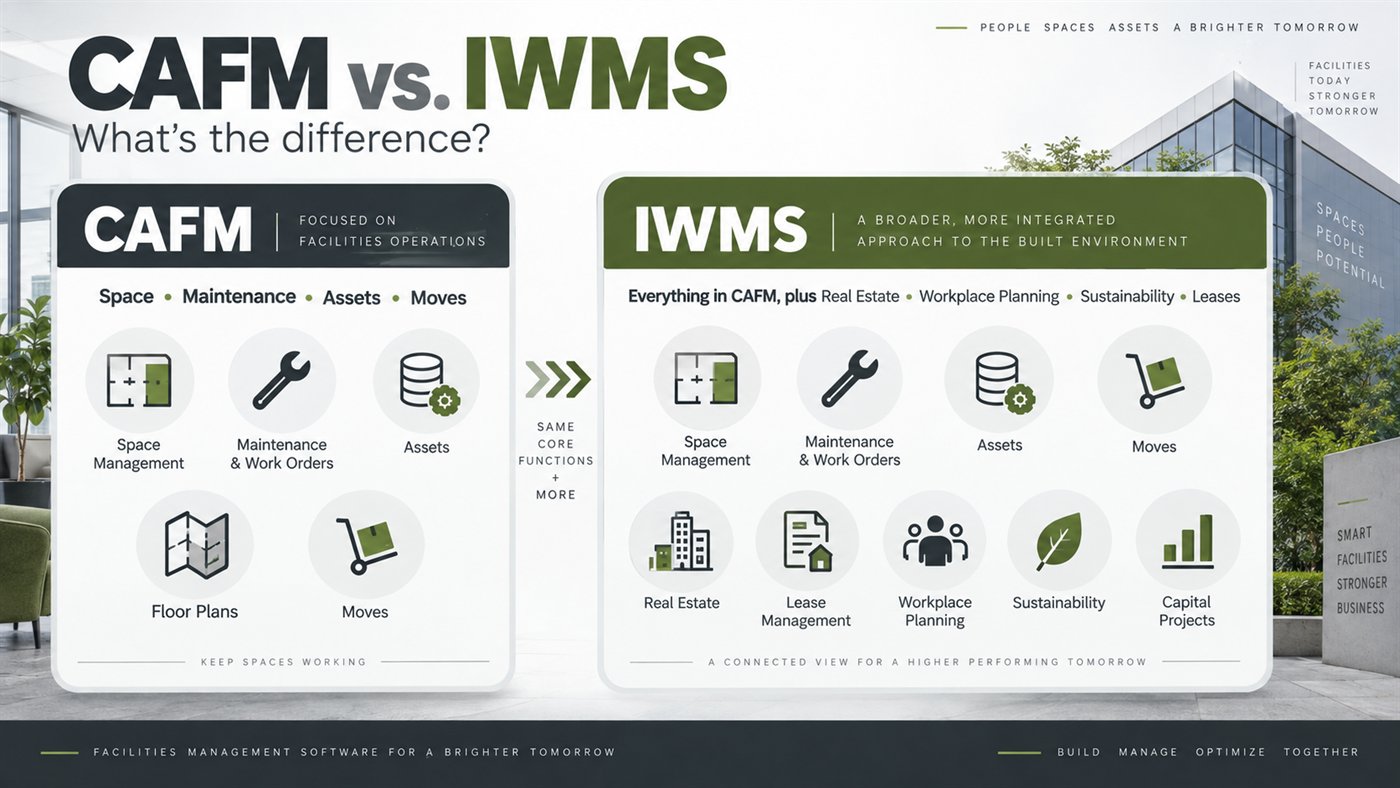
CAFM, or Computer-Aided Facility Management, is focused
primarily on helping facilities teams manage their physical spaces and day-to-day operations.
A CAFM system may include tools for space management, floor plans, moves, assets, maintenance,
and work orders.
IWMS, or Integrated Workplace Management System, typically
takes a broader approach. Along with many of the same facilities management functions found in
CAFM software, an IWMS may connect additional areas such as real estate, lease management,
workplace planning, sustainability, capital projects, and other business processes.
So, where is the dividing line?
In practice, there is a lot of overlap.
Modern CAFM platforms have expanded far beyond simple floor plans and space tracking, while
IWMS platforms often include traditional CAFM functionality at their core. The right terminology
may matter less than whether the software actually supports the way your organization
operates.
Which One Do You Need?
Instead of focusing only on the acronym, look at the capabilities you need today and where
your facilities program is headed.
If your priorities include managing space, moves, maintenance, assets, floor plans,
and workplace data, a CAFM solution may provide everything you need. If your
organization also needs to integrate broader real estate, financial, sustainability, or
enterprise-wide workplace processes, an IWMS may be a better fit.
Ultimately, the best facilities management platform is the one that gives your team accurate
information, simplifies your processes, and can adapt as your organization changes.